
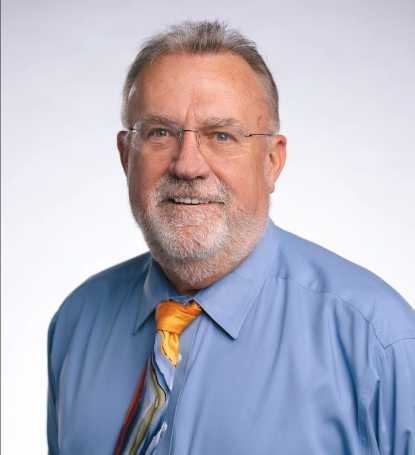
James A. DeLapp II, D.D.S., M.S. is an Associate Professor at the University of Colorado School of Dental Medicine.
Dentists frequently ask what their dental license allows them to do for anxiety management and when a minimal-sedation permit is required. This blog attempts to explain that distinction. The Colorado Dental Practice Act and Colorado Code of Regulations (CCR) contain language that can be confusing, particularly regarding divided doses.
Currently the Colorado Code of Regulations and The Dental Practice Act follows the 2016 ADA guidelines regarding sedation, though the 2026 guidelines are published and considered more contemporary.
The brief distinction, under this reading, is:
- One oral dose: For anxiety management within the maximum recommended dose (MRD) for unmonitored home use = Allowed with a Colorado Dental License.
- Divided or incremental doses: Minimal Sedation License Required = Must be within the applicable MRD for the specific drug you are prescribing for unmonitored home use and/or taken in the office.
The examples below illustrate this reading of the CCR. They explain the dosing distinction; they are not patient-specific dosing instructions. The applicable maximum may be lower depending on the patient and the medication’s labeling.
A Dental License with NO minimal sedation license may:
Under a strict single-administration interpretation, a dentist may administer one dose of an anxiolytic medication, such as triazolam (Halcion) or diazepam (Valium), within the applicable MRD (maximum recommended dose) for unmonitored home use. Nitrous oxide may also be administered.
For illustration, assume an applicable MRD (maximum recommended dose) of 0.5 mg of triazolam (Halcion). A dentist may prescribe a patient one tablet of 0.25 mg or two 0.125 mg tablets for a total of 0.25 mg that must be taken at one time for a single administration of the drug.
Under this interpretation, no additional dose or doses could be administered during the appointment, even though the initial amount was below the assumed MRD of 0.5 mg.
In the CCR, the “one dose” refers here to one administration: one time event, not the number of pills.
Minimal-Sedation License:
Under the divided-administration interpretation, a dentist with a minimal-sedation license could administer the same initial amount and then provide supplemental doses when needed and appropriate.
For example:
- Initial administration: Two 0.125 mg tablets = 0.25 mg.
- First supplemental dose, if needed and appropriate: One 0.125 mg tablet, bringing the total to 0.375 mg.
- Second supplemental dose, if needed and appropriate: One additional 0.125 mg tablet, bringing the total to 0.5 mg.
This is an example of divided doses totaling 0.5 mg, the assumed MRD for unmonitored home/in office use in this illustration. It does not establish when supplemental doses should be given.
What does “divided over time” as it pertains to minimal sedation licensure mean?
The question is not simply how much medication may be administered, but whether the total may be divided over time—and what additional authority the license provides.
Rather than committing to the entire amount at the outset, the clinician begins with a smaller amount and considers additional medication based on the patient’s response. Depending on the timing and cumulative effects, this approach may also extend the duration of sedation.
Permitted minimal sedation also carries more extensive requirements for equipment, patient evaluation, monitoring, personnel, documentation, and emergency preparedness, as outlined in the CCR.
In principle, divided administration may allow the clinician to begin with less medication, assess the response, and administer additional medication only when necessary.
This may appear to be a more prudent approach. However, it comes with an important limitation.
Oral dosing is NOT equivalent to IV titration
Oral dosing is NOT equivalent to intravenous titration. Absorption and peak effects are less predictable. Additional medication given before an earlier dose has reached its full effect can accumulate, producing deeper or more prolonged sedation than intended.
Divided dosing therefore should not automatically be characterized as safer!
QUESTIONS? Call the Dentist Professional Liability Trust of Colorado for more information and learn about our Sedation Courses offered bi-annually in the Denver Metro area and The Western Slope that fulfill the initial training requirements along with continuing education requirements for continued licensure for a Minimal Sedation Permit.
303-357-2600 or email [email protected]
Regulatory language
Rule 1.14(E)(1)(c) addresses anxiety medication for non-pediatric patients. It permits “a dose of a single drug” within the maximum recommended dose for unmonitored home use, optionally combined with nitrous oxide.
Rule 1.14(F)(3) separately requires an appropriate sedation permit to administer minimal sedation.
The difficulty lies in interpreting the boundary between those provisions, particularly because the rule does not expressly explain whether “a dose” must be administered all at once.
Terminology: MRD is used here to mean the maximum recommended dose for unmonitored home use, rather than simply the maximum daily dose.
 “I’ve been with Dental Trust since completing my residency, and I can wholeheartedly attest to their exceptional professionalism and commitment. Their open communication always makes me feel valued and understood, with my best interests consistently prioritized. Dental Trust has stood by me, providing unparalleled support, and ensuring I’m well taken care of. I’m grateful to be part of the Dental Trust family and highly recommend them to any dental professional seeking trustworthy coverage.”
 “I had insurance coverage with the AAO for over 20 years and switched to the Trust seven years ago. The AAO was fine, but I never had anyone to reach out to, when I had questions or concerns about patients. Having a personal connection with my local peers, like Dr. Delapp and Dr Geck at the Trust, has made it easy to discuss those difficult circumstances which we all have. Honestly, I would rather have my insurance contact being in Denver, vs calling a 1-800 number, probably one of the best moves I’ve made to protect my practice.”
 “I have been practicing dentistry in the state of Colorado since 2007. It is an absolute privilege to work with The Trust. I am proud to be part of a member owned, non-profit organization where I am represented and supported by my peers. The Trust has given me advice in many aspects of private practice. This organization uses dentists to examine claims, and the best legal teams to guide you. They are professional and understand what the stresses and challenges are of being a dental professional. There are times in our careers where we are working long days or late night and we need advice. The Trust will be there for you 100%. I support The Trust as much as they support me. I would not want to practice without them.”
 “It’s so nice to have a support system such as the Trust to help navigate through a situation. I greatly appreciate what you do to support dentists like myself throughout the entire state. Thank you, Thank you!"
 "I have been working with the Trust for a total of 5 years. They have made it very easy to reach out for advice and are always protecting the dentist. They are a valuable resource and are consistently professional. The rates are very reasonable but more importantly, the resources and support you are getting by becoming a Member of the Trust is invaluable."
 "Here’s my experience with The Dentists Professional Liability Trust as one of its defense attorneys: it exclusively uses seasoned dentists as claim professionals, so they know the dentistry, provide excellent assistance to legal counsel, and understand the emotional toll of having a patient sue, even though you’ve done your best. The Trust provides sound, honest advice to avoid or resolve conflicts; it arranges immediate legal help for insureds if complaints are made to the Colorado Dental Board; and if litigation is unavoidable, it lends thoughtful, steady support. It is a superior insurer."
 "I brag to my friends in other states about the tremendous advantage Colorado dentists have with the Trust. I have more confidence knowing that a group of dentists are supporting me and looking out for my best interests and my practice. I'm assured knowing that I can call them anytime, with any question, and I'm able to talk to an actual practicing dentist. I feel like the Trust cares for me and my practice."
 “The Trust is one of our state's most unique and beneficial resources for Colorado dentists and dental specialists. It offers exceptional value and excellent representation coupled with a very professional and knowledgeable staff who are always willing to offer advice and resources to ensure optimal risk management for our practices.”
 “I have participated in The Trust since their establishment in 1987, and value their competent, professional staff, their reasonable rates, and their sound business practices. They have built a wonderful reputation for serving and protecting Colorado dentists! Their coverage cannot be beat!”
 “I would be happy to share with my colleagues that my participation in the Trust over the past 25 years has been a consistent source of security, comfort, predictability and stability for my dental practice. I rest a little easier knowing that the folks at the Trust have engineered a liability safety net that provides excellent protection for my practice and family assets. I cannot imagine practicing without this critical coverage.”